Yuen Yuen Ang
Alfred Chandler Chair Professor of Political Economy at Johns Hopkins University
Ang studies governance under complexity and how societies adapt, or fail to adapt, to disruptions—whether from China’s transformation, multipolarity, or AI.
Yuen Yuen Ang is the Alfred Chandler Chair Professor of Political Economy at Johns Hopkins University. A central theme in Ang’s work is governance under complexity and how societies adapt, or fail to adapt, to disruptions—beginning with China’s capitalist revolution and extending to multipolarity and artificial intelligence. Her cross-disciplinary research has won awards across political science, economics, and sociology, with prize committees recognizing it for advancing “game-changing” ideas. Her books How China Escaped the Poverty Trap (2016) and China’s Gilded Age (2020) are both recommended by The Economist. Bridging scholarship and public engagement, Ang has been named among the world’s 100 Most Influential Academics in Government for “research with potential to steer the direction of government.” Ang serves as a Trustee of the Trust Principles of journalistic integrity at Reuters, the world’s largest multimedia news provider.
Recent interviews and media coverage -
World Economic Forum & Channel News Asia (Polycrisis to Polytunity: The Future of Geopolitics)
World Peace Foundation (Polytunity & Agency in the Age of Disruption)
U.S.-China Monitor by the Carter Center (Who Gets to Explain Development)
ODI Global Advisory (Lead Change)
The Economist (quoted on China’s economic paradox)
Appointments: At Johns Hopkins, Ang is the first named chair at the Center for Economy and Society, a multidisciplinary program established to find alternatives to traditional economic thinking. She is also appointed at the SNF Agora Institute, dedicated to strengthening global democracy. Ang directs The Polytunity Project and The Multipolar Forum, which convenes experts across sectors in Washington, D.C. to explore the rise of a multipolar era. In the summer of 2026, she was named Wilmar Visiting Professor of Geoeconomics and Global Transformation at the National University of Singapore. She also lectures annually at Schwarzman College, a program that trains future leaders in U.S.-China relations.
Adapting to Global Disruptions: Ang argues that we cannot tackle 21st-century disruptions using paradigms inherited from the 20th-century. Rather than mourning the current moment as “polycrisis,” she reframes it as polytunity: a rare opening for deep transformation, beginning from how we see and think. Her response is AIM: Adaptive, Inclusive & Moral Political Economy—a system of thinking that centers complex systems (adaptive), pluralistic solutions (inclusive), and power awareness (moral). AIM formalizes ideas developed across Ang’s scholarship. The Glossary hosted on this website maps the ideas and projects generated from AIM, including work on the emerging world order, human-AI co-creation, and China’s economic paradox.
Recognition: Ang is the inaugural recipient of the Theda Skocpol Award from the American Political Science Association for “impactful empirical, theoretical, and methodological contributions” to comparative politics. She received the Peter Katzenstein (political economy), Viviana Zelizer (sociology), Douglass North (economics), and Alice Amsden (socio-economics) book prizes, along with the Andrew Carnegie Fellowship for “high-caliber research on pressing issues of our times.” More recently, her research using LLMs to study policy communication under complexity is supported by the U.S. National Science Foundation.
Teaching: An award-winning teacher, Ang teaches students how to think, and not simply what to think. Her recent courses include China and the World, From Polycrisis to Polytunity, and Directed Improvisation with AI. The Institute for New Economic Thinking produced a lecture series on her work, which has been viewed more than a million times. Rather than banning AI, Ang trains students to direct and co-create with AI in their work.
Media: Known for translating complex debates into accessible insights for global audiences, Ang has been interviewed by media across Asia, Europe, and North America, including CGTN Visionaries, Davos Radio, Die Zeit, Freakonomics Radio, and The Ezra Klein Show. She writes for premier outlets such as Foreign Affairs, Pengpai (China), Project Syndicate, and The New York Times

Impact & Resonance
-
![]()
Margarita Cedeño, former Vice President of the Dominican Republic
“Yuen Yuen Ang proposes a bold and transformative concept called ‘polytunity’… It is an invitation to change the paradigm from which we interpret reality and design the future.”
-
![Logo of the American Political Science Association with the acronym 'APSA' and full name written below.]()
Theda Skocpol Scholar Prize (Comparative Politics)
“Ang’s scholarship evokes the spirit of Theda Skocpol’s contributions to political science. Like Skocpol, her work pushes us to rethink existing theories, concepts, and categories in comparative politics.”
-
![NSA logo with white letters and circular design on a blue background]()
Viviana Zelizer Book Prize (Sociology)
"How China Escaped the Poverty Trap truly offers game-changing ideas... and should have a major impact across many social sciences."
-
![Freakonomics Radio logo above a green apple split in half with an orange slice inside, and a small orange segment next to it.]()
Stephen Dubner, Host of Freakonomics Radio
"One of the most powerful and fascinating pieces we’ve done in some time… If Yuen Yuen Ang really is, as she puts it, intellectually weird — well, she’s my kind of weird.”
-
![A black and white headshot of Ezra Klein wearing glasses, with the text "The Ezra Klein Show" in bold white letters on a mustard yellow background.]()
Ezra Klein, Podcast Host @ The New York Times
"Pioneering work on China’s political system... pretty profound implications. Or at least, it is an interesting way of thinking about how we are governed here [in America]."
-
![Yuen Yuen Ang's award-winning book, How China Escaped the Poverty Trap (2016), acclaimed as "game-changing" and "field-shifting"]()
Peter Katzenstein Book Prize (Political Economy)
“Ang’s systematic engagement with diverse literatures circumvents disagreement over which came first, democracy or development, to make a field-shifting move to non-linear complex processes.”
-
![Logo for Freakonomics Radio with a green apple cut open to reveal an orange inside and a slice taken out, set against a white background.]()
Listeners @ Freakonomics Radio
“I am perhaps a simple woman, but I recognize quality work and discussion when I see it or hear it.”
“It was so consuming I had to simply stop my car and sit there listening.”
“Probably the thing I appreciate the most is your willingness to step back, look at the paradigms and ask, can we do better?"
-
![Red BR logo on a white background]()
Matt Lord, Senior Editor @ Boston Review
"I'm very grateful for the moral and analytical clarity you bring.” - On Ang’s essay Beyond Elite Innovation
-
![White letter 'E' on a red background.]()
The Economist, Recommends 5 Books on Development
“The enduring drag of weak institutions on a country’s development might imply pessimism. Such thoughts can be dispelled by considering the example of China… Ang [How China Escaped the Poverty Trap] attributes China’s remarkable transformation to a ‘co-evolutionary’ process.”
-
![]()
Douglas North Book Prize (Institutional Economics)
“Ang [China’s Gilded Age] develops provocative new theory to distinguish among different types of corruption… This outstanding book has already made substantial waves in academia and in policy circles.”
-
![]()
Alice Amsden Book Award (Socio-Economics)
“In China’s Gilded Age, Yuen Yuen Ang’s eclectic intellectual and methodological approach also ensures the book’s appeal to a broad interdisciplinary audience.”
-
![]()
Kenyan Ambassador Martin Kimani
“Yuen Yuen Ang has a principle, a very simple principle of ‘use what you have,’ which offers a sharp challenge to the legacy of coloniality in development. It rejects the imposition of external models that fail to fit local realities, urging instead the strengthening of existing institutions, however flawed, through use and adaptation.” - Speech at BMZ-Konferenz in Germany, Coloniality & the Way Forward
-
![]()
Efosa Ojomo, Christensen Institute
“I’m reminded of what Yuen Yuen Ang, a political scientist I deeply admire, says about development: ‘the first step in development is using what you have, not what you want…’ I think the sooner we begin to use what we have–however little–to get what we want, the sooner we can develop sustainably.”







Global Speaking
-
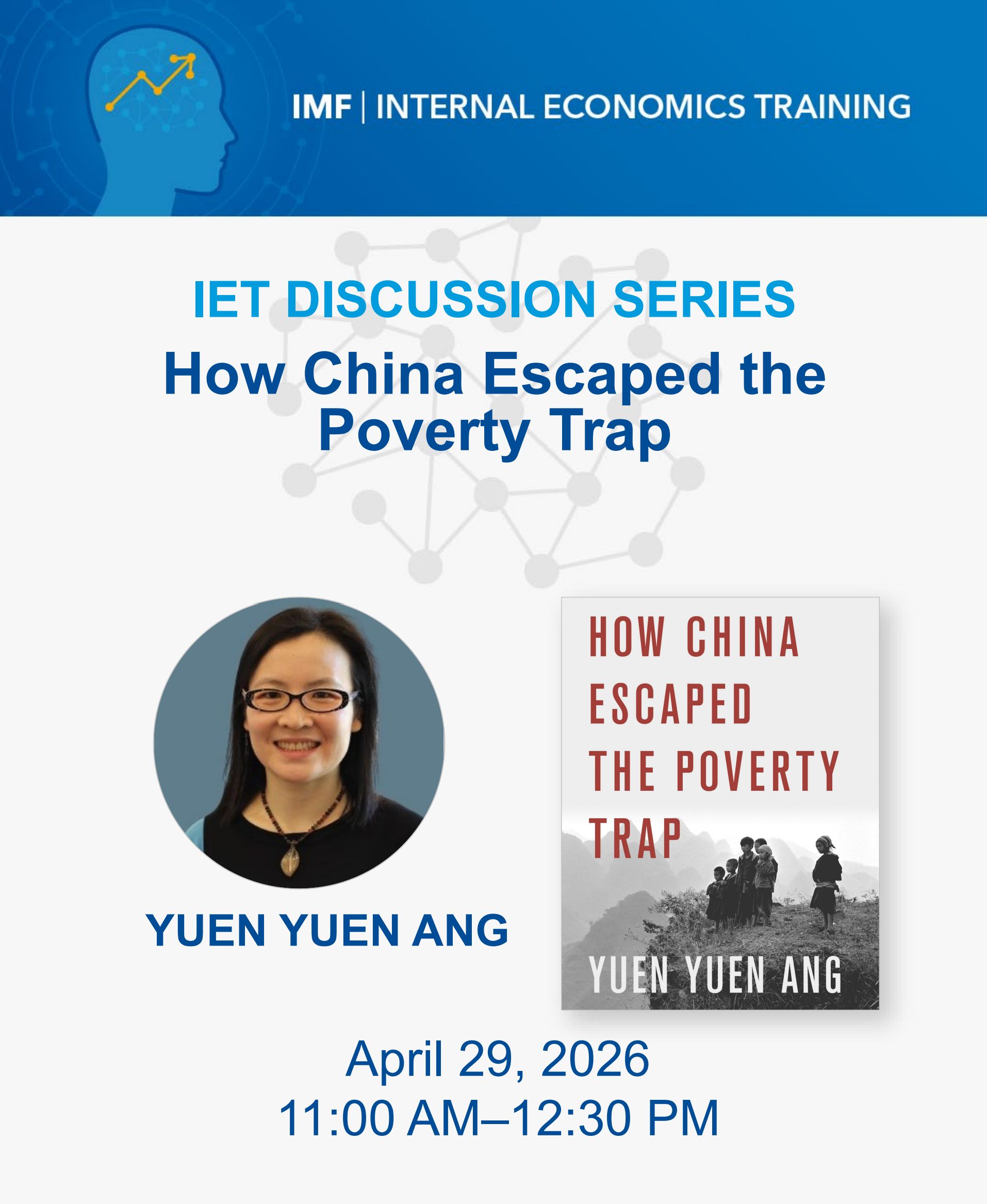
![IMF Book Talk - How China Escaped the Poverty Trap]()
IMF Economics Training, Washington D.C.
Hosted by International Monetary Fund, marking 10th anniversary of How China Escaped the Poverty Trap (2026)
-
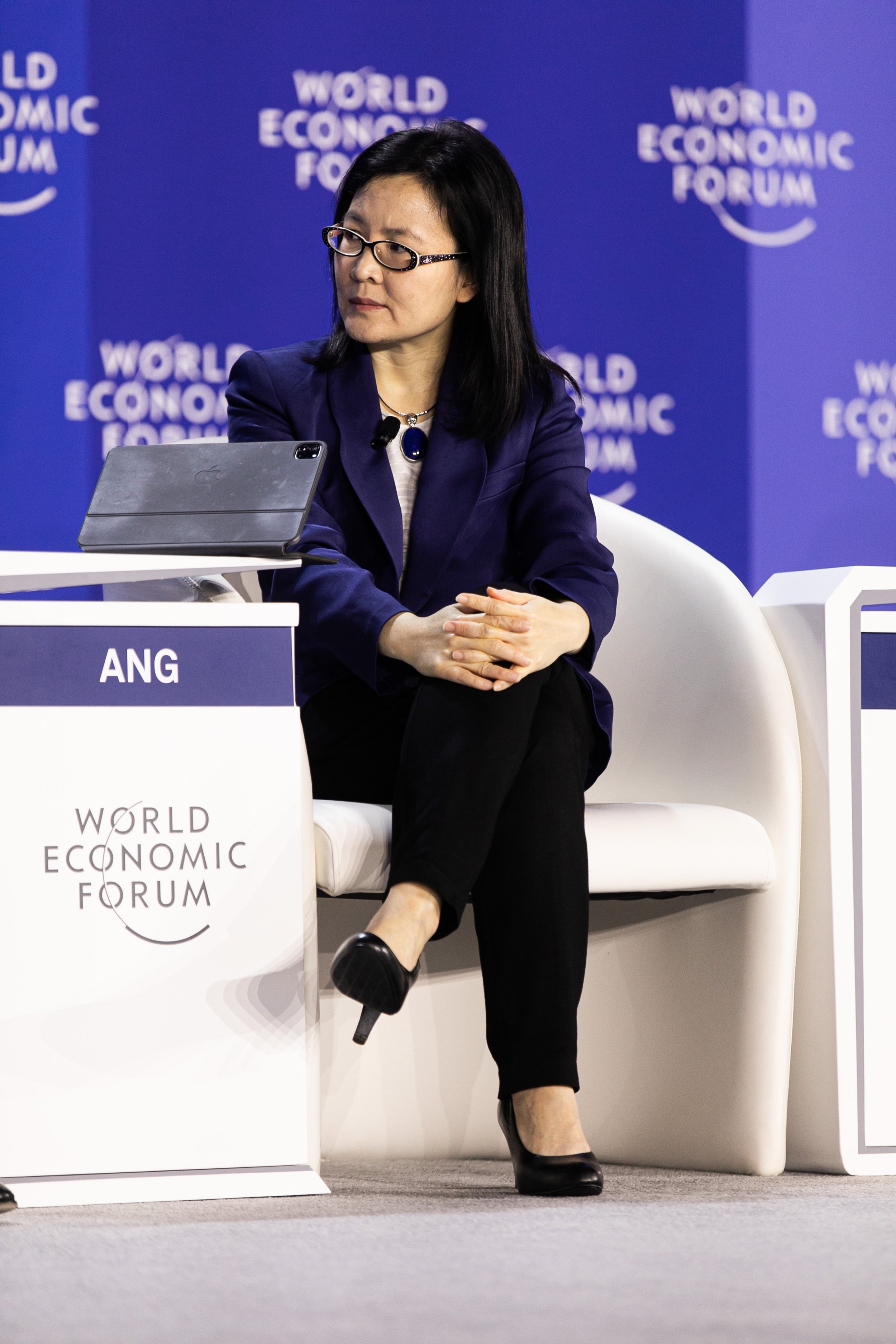
![Yuen Yuen Ang at Summer Davos]()
Summer Davos, Tianjin
Keynote panel at World Economic Forum, Contours of a New Economic Order (2025)
-
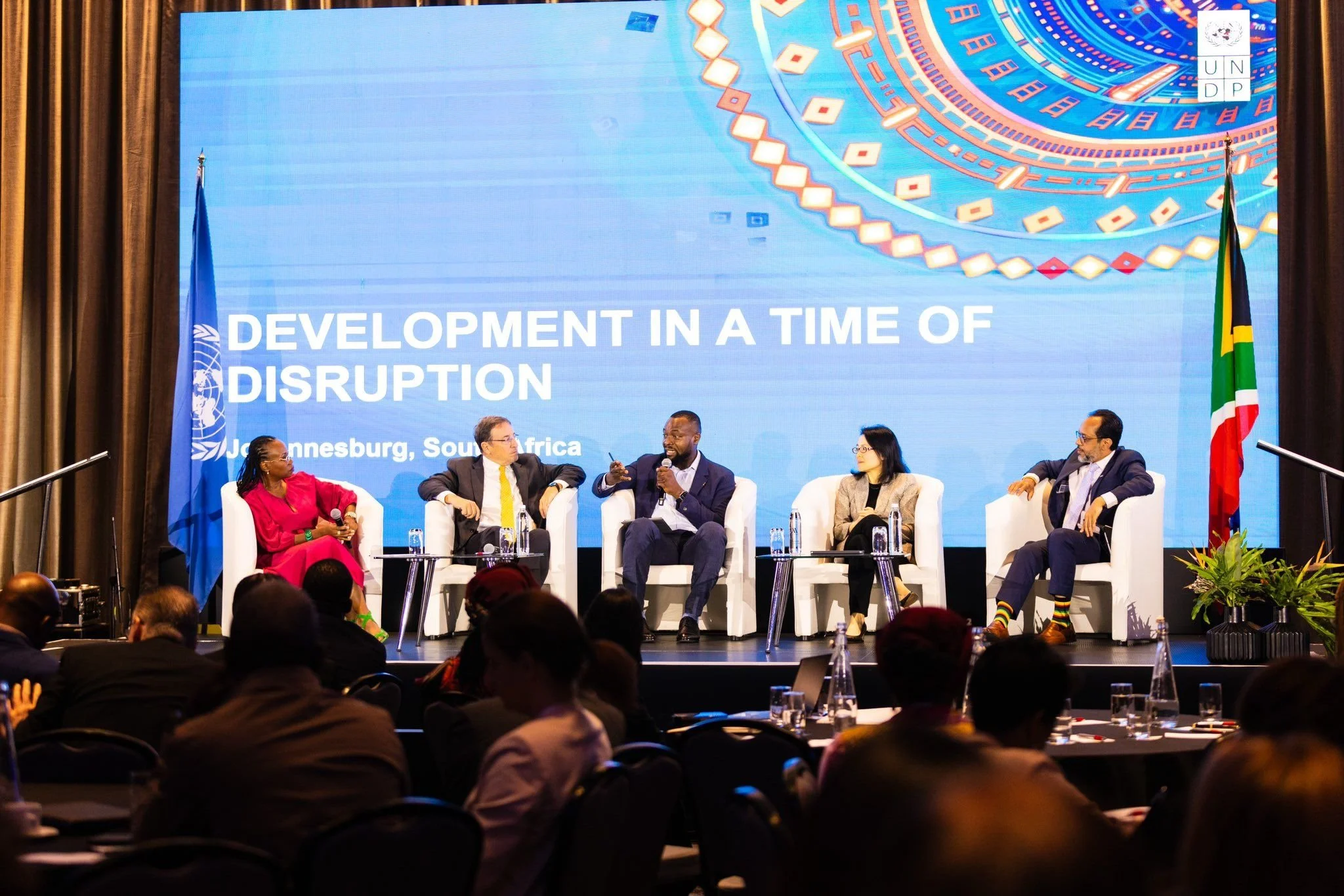
![Yuen Yuen Ang introduces polytunity at UNDP]()
UNDP Global Leadership Retreat, South Africa
Introducing polytunity at UNDP, keynote panel on Development in a Time of Disruption, chaired by UNDP Chief Administrator Mr. Achim Steiner (2024)
-
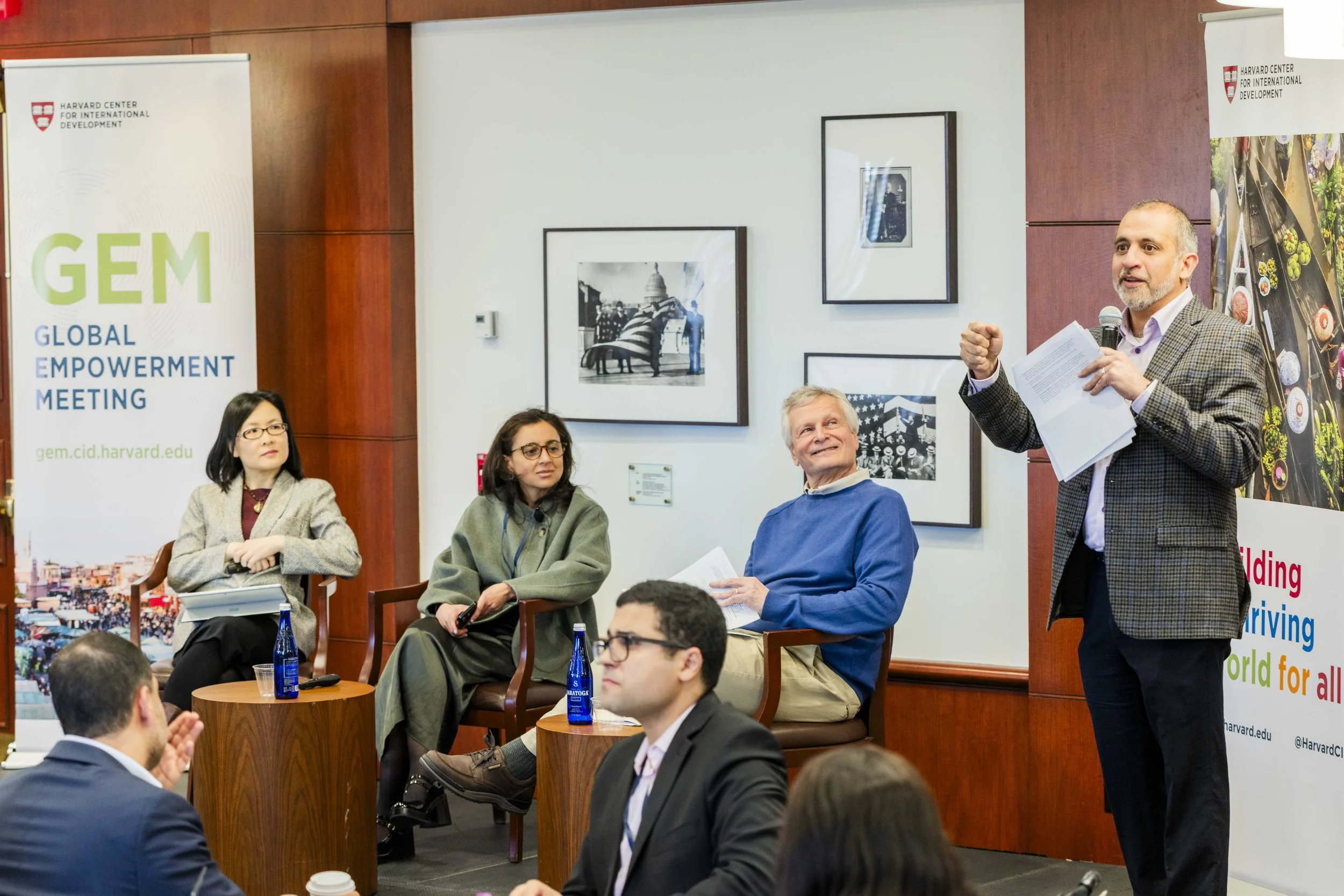
![]()
Harvard University, Global Empowerment Meeting
Expert panel on Orchestrating Economic Transformation (2026), chaired by Dani Rodrik; read Ang’s “Industrial Policy Under Uncertainty” below
-
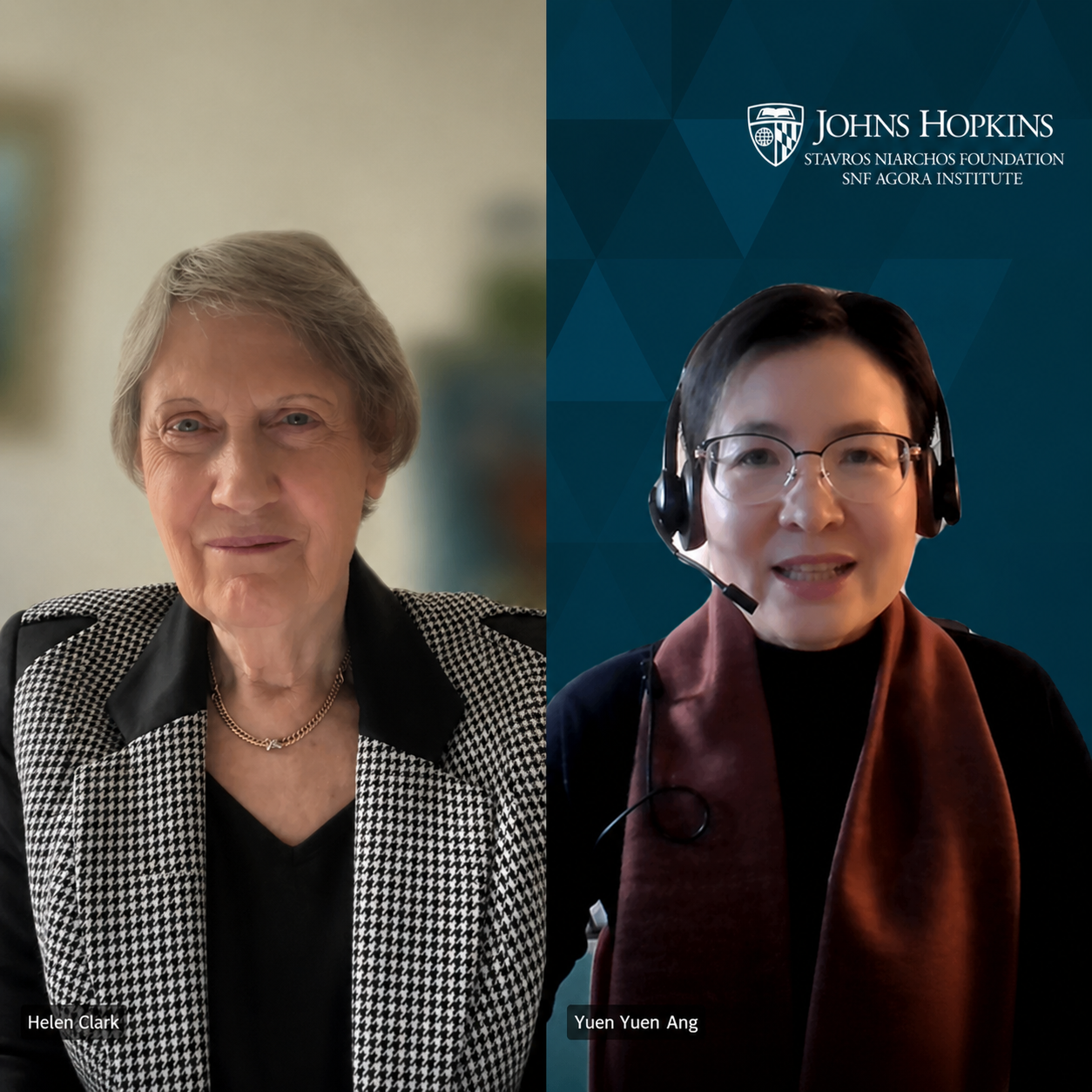
![Yuen Yuen Ang with Helen Clark Unbundling Corruption]()
Helen Clark Foundation, New Zealand
Webinar with former New Zealand Prime Minister Helen Clark, on Ang’s Unbundling Corruption, cited by the Helen Clark Foundation (2024)
-
![]()
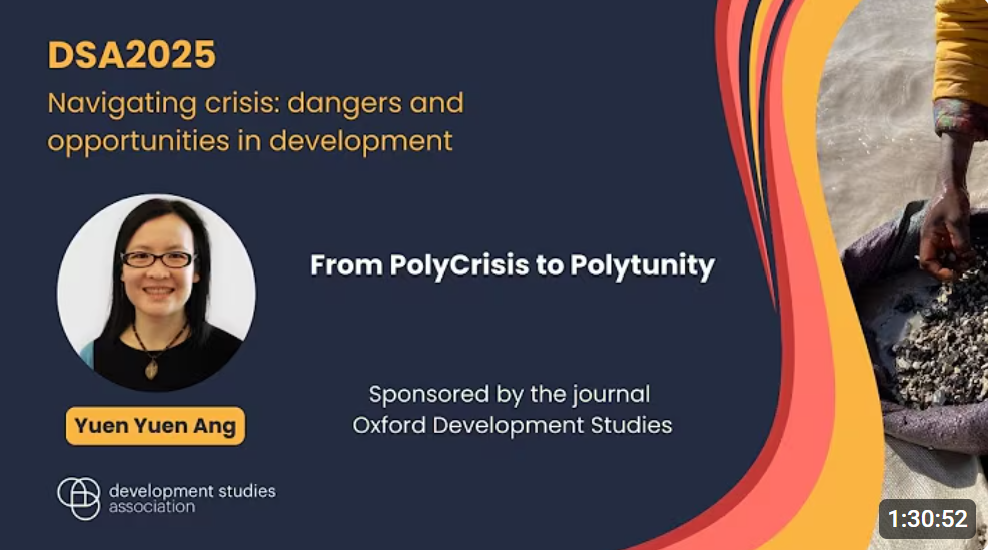
Development Studies Association, UK
Read Ang’s keynote From Polycrisis to Polytunity (2025) & companion essay AIM: Adaptive, Inclusive & Moral Political Economy